

LABOR DAY – SEPTEMBER 7TH
Labor Day honors the contributions, achievements, and resilience of workers across the United States. It recognizes the role of the labor force in building a stronger economy, improving quality of life, and advancing fair working conditions. The holiday also highlights the importance of worker protections and the labor unions that helped shape the pursuit of social and economic justice.
Origins and the Labor Movement
Labor Day grew out of the labor union movement of the late 19th century, when industrial workers advocated for safer workplaces, fair wages, and reasonable hours. The first Labor Day parade was held in New York City on September 5, 1882, organized by the Central Labor Union. That event helped establish the foundation for a national observance, which became an official federal holiday in 1894 under President Grover Cleveland.
Today, Labor Day serves both as a reminder of past labor struggles and as a celebration of American workers. Observed on the first Monday in September, it also marks the unofficial end of summer. Many communities celebrate with parades, picnics, barbecues, and family gatherings, while retailers often use the weekend for major sales events.
Labor Day Facts and Quotes
- The Central Labor Union observed the first Labor Day holiday in New York City in 1882.
- According to traditional fashion rules, Labor Day weekend has often been considered the last appropriate time to wear white.
- The National Safety Council reports that alcohol-impaired driving fatalities increase, on average, by 34% over Labor Day weekend compared with non-holiday periods.
- Labor Day often marks the end of summer, the beginning of the school year, and the start of football season.
“All labor that uplifts humanity has dignity and importance and should be undertaken with painstaking excellence.” — Martin Luther King Jr.
“Labor is prior to, and independent of, capital. Capital is only the fruit of labor and could never have existed if labor had not first existed. Labor is the superior of capital and deserves much higher consideration.” — Abraham Lincoln
PATRIOT DAY – SEPTEMBER 11TH
Patriot Day, observed each year on September 11, honors the victims, survivors, first responders, service members, and families affected by the terrorist attacks of September 11, 2001. It is a national day of remembrance, reflection, and unity, marked by solemn ceremonies and public acts of service.
History and National Significance
Congress established Patriot Day through a joint resolution signed on December 18, 2001, creating an annual observance to support the nation’s continued remembrance and healing. The day recognizes the nearly 3,000 people who died, while also honoring the courage, resilience, and compassion shown in the aftermath of the attacks.
Observances and Acts of Service
Across the United States and at U.S. facilities abroad, flags are flown at half-staff. A national moment of silence is observed at 8:46 a.m. Eastern Time, marking the moment the first plane struck the North Tower of the World Trade Center. Patriot Day is also closely associated with the National Day of Service and Remembrance, which encourages people to volunteer, support charitable causes, and help their communities in tribute to those affected by 9/11.
Patriot Day Facts
- Patriot Day is observed annually on September 11.
- U.S. flags are flown at half-staff on American soil and at U.S. facilities abroad.
- A moment of silence is held at 8:46 a.m. Eastern Time to honor the time the first plane struck the North Tower.
- The National September 11 Memorial & Museum occupies part of the former World Trade Center site and includes bronze parapets inscribed with the names of those killed in the 2001 attacks and the 1993 World Trade Center bombing.
- Cleanup at Ground Zero took eight months and nineteen days and was completed in May 2002.
- The Twin Towers were once among the tallest buildings in the world.
GRANDPARENTS’ DAY – SEPTEMBER 13TH
Grandparents’ Day honors the love, guidance, and lasting influence grandparents bring to families and communities. It is a time to show appreciation for older generations, celebrate family connections, and recognize the wisdom, stories, and traditions grandparents pass on. In the United States, the observance has been nationally recognized since 1978 and is celebrated on the first Sunday after Labor Day.

Origins and Purpose
The idea for Grandparents’ Day is closely associated with Marian McQuade of West Virginia, who advocated for a day that would encourage grandchildren to appreciate their grandparents and learn from their heritage. Support grew at the state and national levels, and in 1978 President Jimmy Carter signed a proclamation designating the first Sunday after Labor Day as National Grandparents’ Day.
How Families Celebrate
Families often celebrate by spending meaningful time together, sharing meals, exchanging cards or small gifts, looking through family photos, or listening to stories from past generations. Communities may also mark the day with school activities, senior-center events, picnics, or intergenerational programs that bring younger and older people together.
Grandparents’ Day Facts and Quote
- Names for grandparents vary across cultures, including Nana, Grandma, Grandpa, Abuela and Abuelo in Spanish, Nonna and Nonno in Italian, Oma and Opa in German, and Babushka and Dedushka in Russian.
- A long-term study in Berlin found that grandparents who provided occasional childcare lived longer than those who did not.
- In 2004, the National Grandparents Day Council named “A Song for Grandma and Grandpa” by Johnny Prill as the official song of National Grandparents Day.
- Congress passed legislation in 1978 proclaiming the first Sunday after Labor Day as National Grandparents’ Day in the United States.
- By 2023, there were about 80 million grandparents in the United States, representing a significant share of family households.
“Today, grandparents continue serving as quiet heroes in every corner of our country. From reading bedtime stories to their grandchildren to volunteering in their communities to acting as primary caregivers, they work hard each day while showing love and kindness to their families and those around them.” — President Barack Obama, Presidential Proclamation, September 11, 2015
FALL BEGINS IN THE NORTHERN HEMISPHERE-SEPTEMBER 23RD
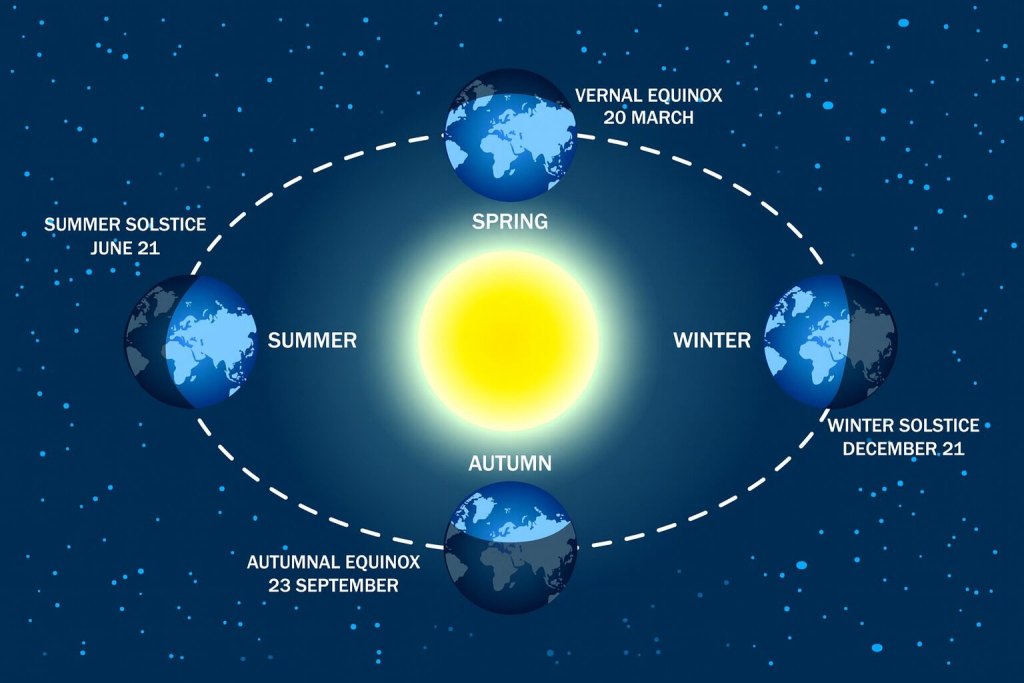
Fall begins with the autumnal equinox, the moment when the Sun appears directly above the equator and the Northern Hemisphere transitions from summer into autumn. Around this time, daylight and nighttime are nearly balanced, temperatures gradually cool, and the natural world begins shifting toward the harvest and winter seasons.
History and Seasonal Meaning
For centuries, the autumnal equinox has held meaning for agricultural communities and seasonal traditions around the world. Many cultures have used this time to give thanks for the harvest, prepare for colder months, and recognize the steady cycle of change in nature.
In the United States, the beginning of fall is often marked by seasonal festivals, apple picking, pumpkin harvests, hayrides, hiking, and visits to see colorful foliage. Although the exact date varies slightly from year to year, the autumnal equinox usually occurs around September 22 or 23 in the Northern Hemisphere.
Fall Facts and Quote
- The Harvest Moon is the full moon that occurs closest to the autumnal equinox.
- The autumnal equinox is also associated with harvest celebrations and seasonal names such as Harvest Tide, Mabon, and Second Harvest Festival.
- Because Earth’s orbit is not exactly 365 days long, the date and time of the equinox shift slightly each year and reset during leap years.
- The word “fall” comes from older English expressions such as “fall of the leaf” and “fall of the year,” referring to leaves dropping as the season changes.
“How beautifully leaves grow old. How full of light and color are their last days.” — John Burroughs